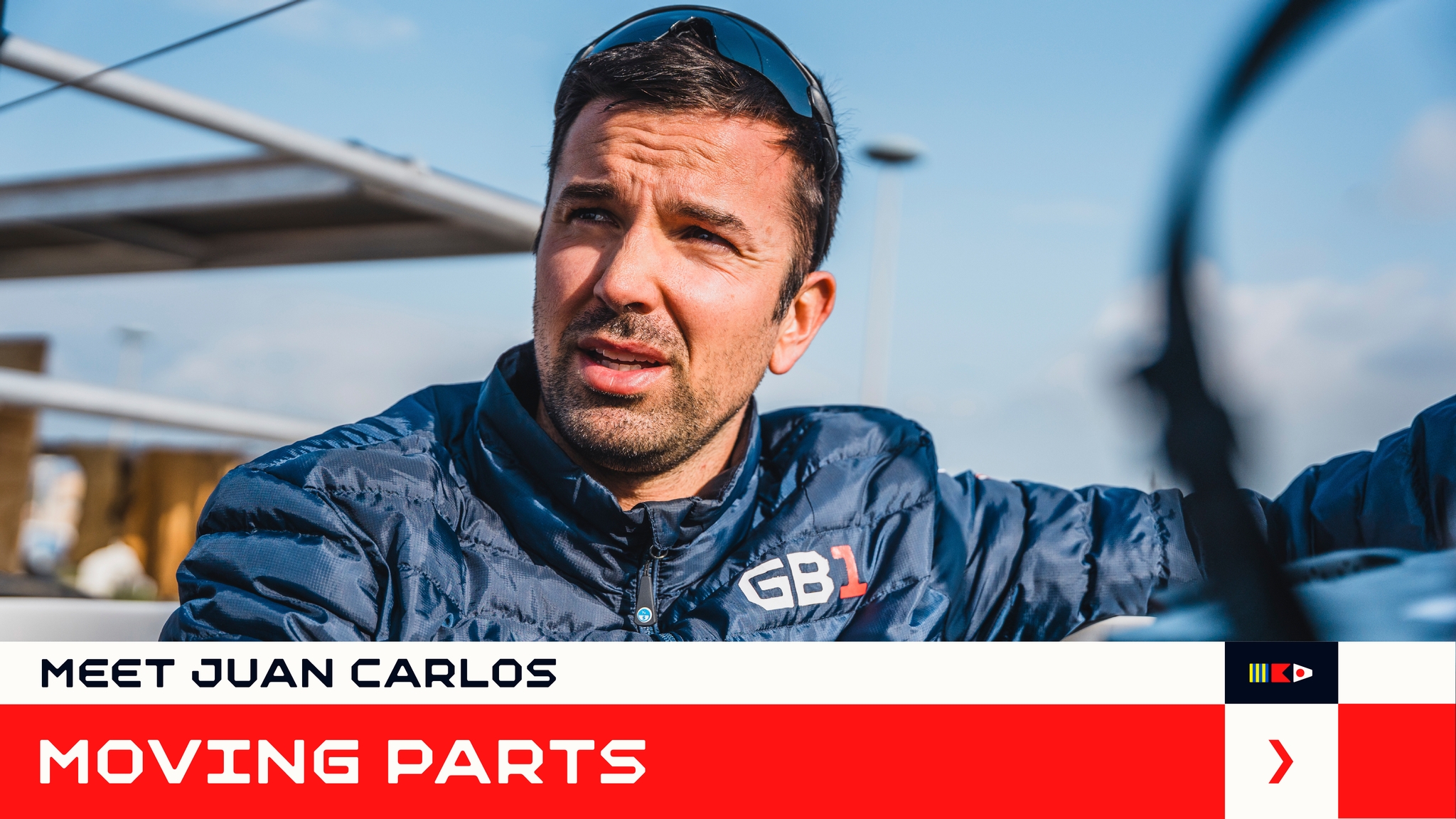
Juan Carlos – better known as JC around these parts – is both boat captain for GB1’s AC40, and the Head of Electronics operationally for the overall team. It keeps him busy.
“Our department is one of the first to start each day. We arrive about an hour before the boat needs to be powered up. We install the batteries, turn the boat on, and allow the control team to run their checks. Then we run our own system checks, which take about another hour.
“So overall, it’s around two hours of preparation before the boat leaves the dock.
While on the water, we stay in constant contact with the controllers, monitoring all onboard systems. If anything behaves unexpectedly, we step in and fix it. After sailing, we go through everything again—checking sensors, connectors, and control units—to make sure we’re ready for the next day.”
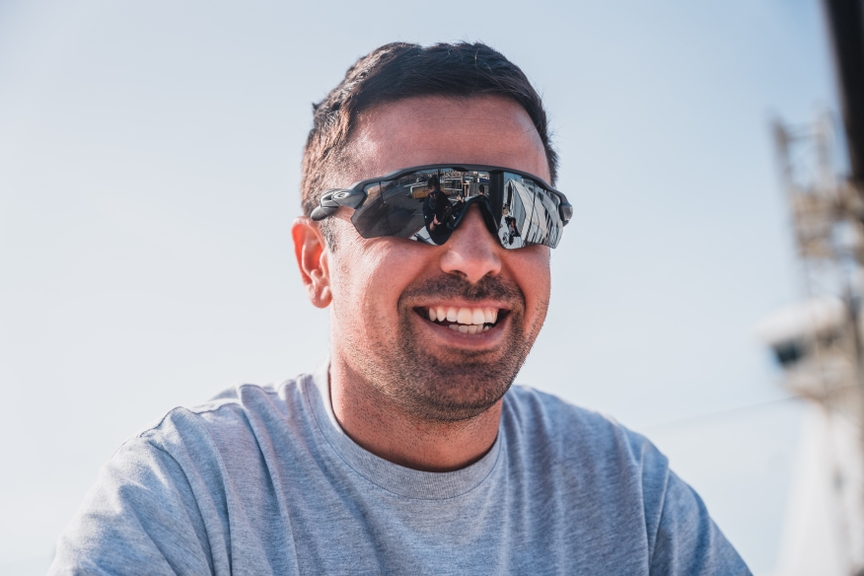
JC started started sailing when he was nine years old. “I’ve been around boats my whole life. Then I went to university and studied electronic engineering for six years. As soon as I finished, I focused on applying my degree to boats—designing and installing monitoring systems for racing yachts.
“I first got involved in the 36th America’s Cup with the Italian team, building all the electronics for the boat that went to New Zealand. For the last two campaigns, I’ve been with the British team.
“It definitely motivates me. It would be amazing to win the Cup and be part of history.
We have a really strong team, and I love working with the British because everyone is so focused and precise. That mindset really suits me.”
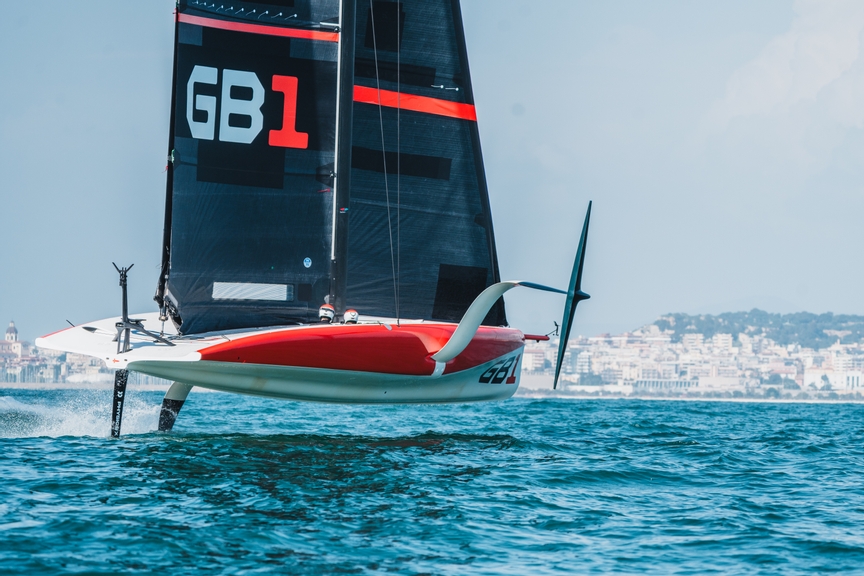
The two roles for the AC40 and the AC75 differ, but both require great attention to detail. “With the AC40, I’m essentially overseeing operations and making sure every department has its job list and that each Head of Department is managing their responsibilities properly.
“On the bigger boat, as Head of Electronics on the operations side, I manage the installation of all electronics coming from the design team and ensure everything runs as expected on a daily basis.
“The AC40s are relatively simple from an electronics perspective, even though they’re still complex boats. You’ve got a foiling monohull, which is already impressive, but the system is very well designed, so with relatively few electronics, you can fly the boat.
“The big boat is a game changer. The level of electronics and complexity is much higher. From an engineering point of view, I love it—it’s amazing how many systems are involved in getting these boats flying.
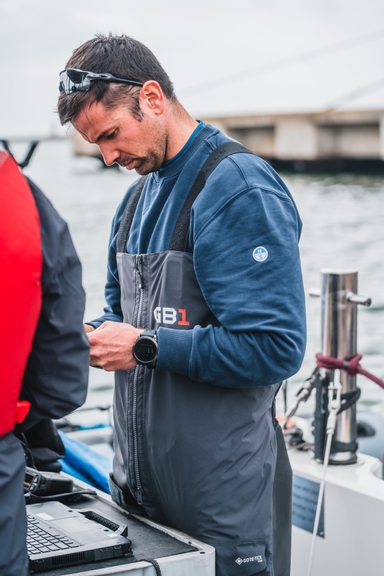
“I couldn’t give an exact number, but there are definitely kilometres of wiring on the boat. In the cockpit alone, there are hundreds of buttons for crew and flight control. The HMIs are custom-built, so the sailors need proper training to use them effectively.
“We’re working with the highest level of technology and performance, alongside incredible engineers across electronics, hydraulics, and more. It’s amazing… The level of technology is far beyond anything else in sailing. These boats are several steps ahead of anything I’ve worked on before.
“We’re constantly working with new systems and the latest technology. We’re always looking for ways to improve—making things lighter, faster, and more reliable. That constant innovation is what excites me the most. I love the America’s Cup because you get to work with the best of the best in every department.”