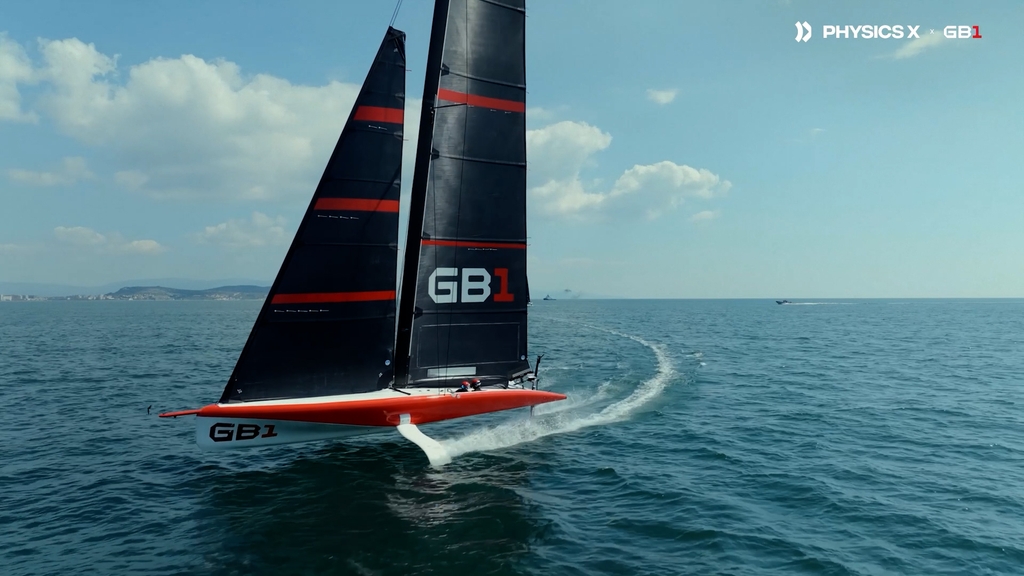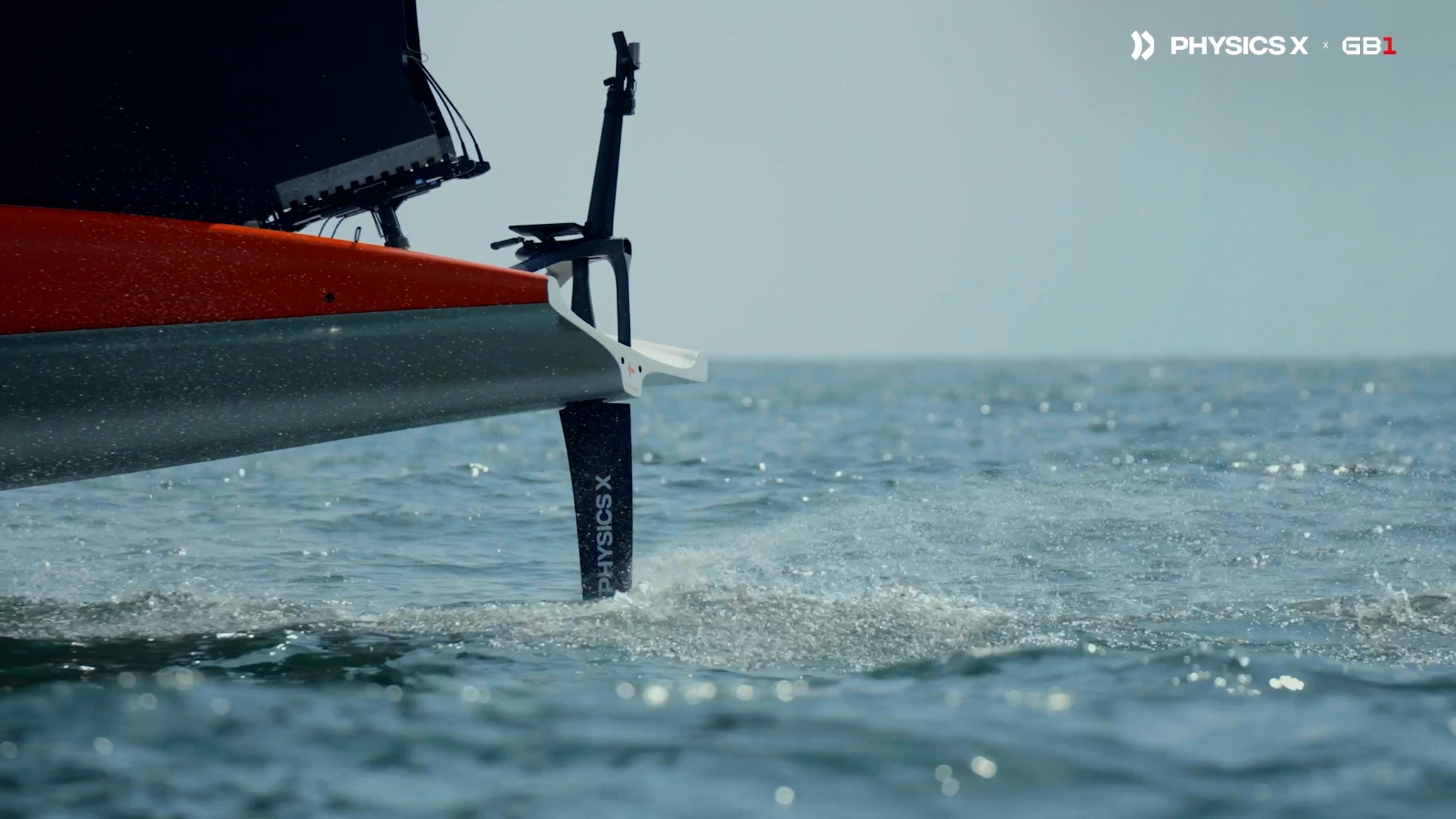
The future of engineering won't be defined by running more simulations. It will be defined by making better engineering decisions, faster.
Every breakthrough in engineering begins with a question. What if we explored another design? What if we tested another configuration? What if we could understand the trade-offs faster?
For the teams building the world's most advanced and complex physical systems, those questions are often constrained by one thing: time.
Whether designing an America's Cup racing boat, a next-generation aircraft, or semiconductor equipment, engineering teams across the world's most critical industries face the same challenge. Traditional simulation workflows are powerful, but they are also computationally intensive, making it difficult to explore more than a small fraction of the possible design space.
That's why PhysicsX is partnering with GB1, Together, we're demonstrating how physics AI can fundamentally change the way aerodynamics engineers design, optimize, and innovate.
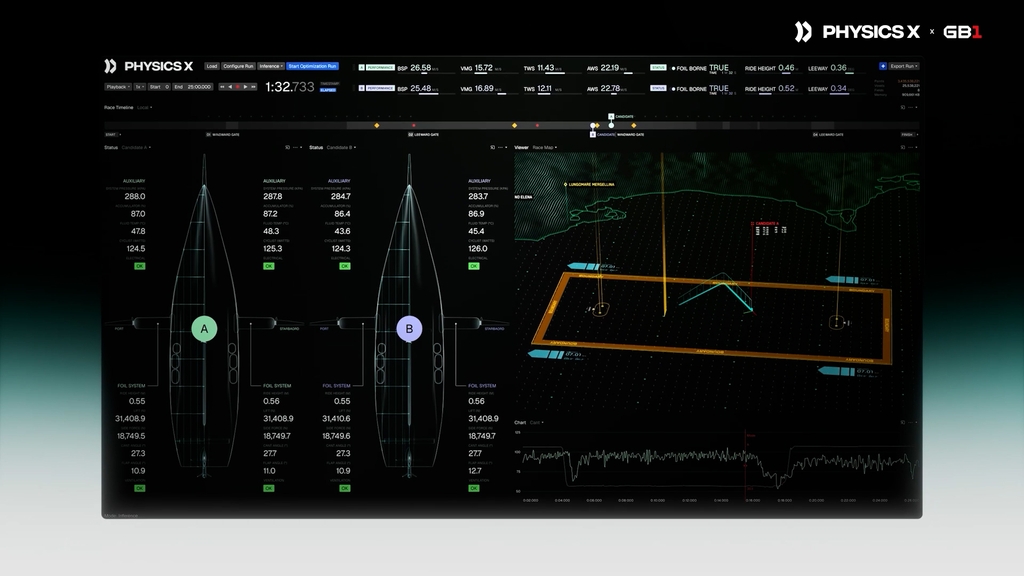
Aerodynamics Engineering at the Edge
The America's Cup has always been as much an engineering competition as a sailing competition. Every component must be optimized, every trade-off matters, and every design decision influences countless others.
The result is one of the most technically demanding engineering environments in the world.
“These boats are very high-dimensional as a design problem. There's an incredible number of states the boat can sail in: If you multiply all of these variables together, you end up with this enormous array of permutations and combinations in the design space,” said Nick Holroyd, Head of Design at GB1.