"Ma'am, there is no second."
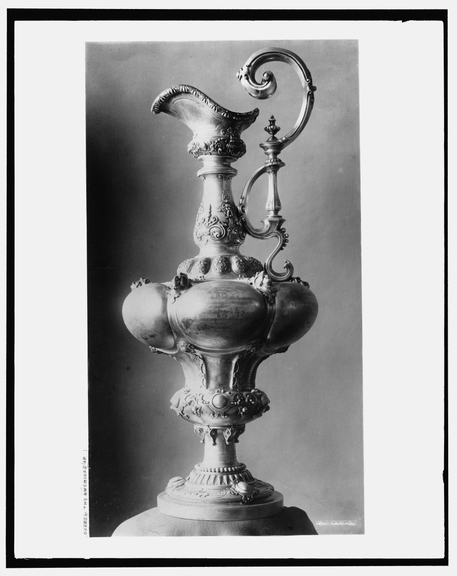
The words have become emblematic of a British failure – a failure to win an ugly silver ewer. It was first taken from these shores by the yacht America, beating a British fleet around the Isle of Wight in a race run by the Royal Yacht Squadron, all the way back in 1851. It’s been the continued failure to win it back – across 175 years and counting – that have given the words such resonance down the decades since.
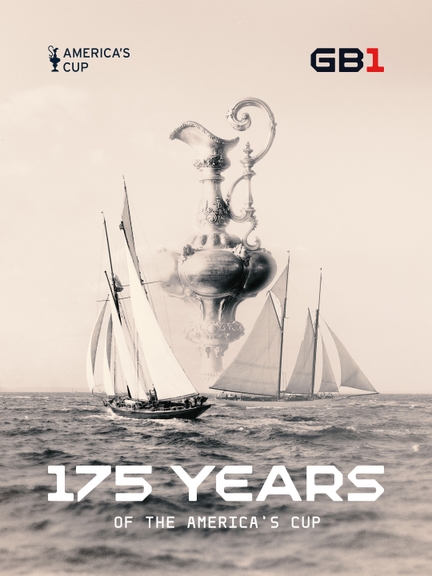
According to sailing historian and author Ian Dear, the words were likely spoken – if they were ever spoken by anyone at all – by Lord Alfred Paget. Paget was accompanying Queen Victoria and the Prince Regent aboard the Royal Yacht, spectators of that first race in 1851. They had anchored in Alum Bay, northeast of the Needles, to watch the fleet return into the Solent. The Queen had dispatched Paget around the Needles in the Royal Yacht’s tender to see who was winning.
It was America, with Aurora around 7 or 8 miles behind her, and it was this significant margin that may have led to Paget’s famous declaration that there was no second place. Or not. Like much America’s Cup history, we will never know for sure.
And history has been less good at recording that the ball was still bouncing – no yacht race is over till it’s, well… over. By the finish off Cowes, Aurora was recorded as being somewhere between 8 and 24 minutes behind America. There was considerable confusion that evening, but both The Times and the New York Yacht Club (NYYC) appear to have accepted the lower of those numbers.
Eight minutes is not much, particularly given that Aurora was the smaller boat, just 47 tons compared to America’s 170. If the race had used any kind of handicapping system, or there had been just a couple more miles before the finish line, the Cup may never have left British shores in the first place… but why spoil a good story with the truth?
It took a while for the silver ewer to become held in a Trust, and to become known as the America’s Cup; the trophy for the winner of a challenge match between two yachts, with the New York Yacht Club as the first Trustee. And those early years were just as much a roller coaster ride from sublime to ridiculous as anything that came later.
In 1885 Sir Richard Sutton’s Genesta was fouled at the start of the first race and, as the fault lay with her now crippled opponent, Sir Richard was offered a sail-over. In a sportsmanlike gesture unique to America’s Cup history, he refused the offer, insisting that they had come to race. It took another nine days for Genesta to be dispatched back to Britain, two races to nil.
After this perhaps misguided display of sporting goodwill came another gesture at the other end of the spectrum. After a relatively uneventful first race in Lord Dunraven’s second Challenge in 1895, the good Lord lodged two protests. Firstly; that he had been impeded by the spectator fleet. This happened to be true, but it was and still is regarded as just being one of those things.
The second protest exploded into a controversy that has been unmatched since. Dunraven accused the American crew of adding ballast to their yacht after she had been measured. This would be illegal, because it allowed her to race with a longer waterline (making her quicker) than would be corrected for by the handicapping system. It was, essentially, accusing the Americans of cheating.
It did not go well for Dunraven. After fouling the Defender in the second race, he then demanded that something be done about the unruly spectator fleet. When the NYYC would not commit to keeping the racecourse clear of spectator boats, Dunraven withdrew immediately after crossing the start line of the third race.
He returned to Britain to find some sympathy for his position. But then, after a critical NYYC report on the affair, he responded with an article in The Field reiterating his original claim that the Americans had cheated. Simply put; the wheels came off. Dunraven’s eventual letter of resignation from the New York Yacht Club was on its way as the Club Committee met to throw him out.
In the aftermath of the trans-Atlantic row, pundits felt that no Challenger would be forthcoming for a very long time. It turned out that they were wrong, and what followed was a golden era both for the Cup, and British Challengers. It was the self-made grocery millionaire Sir Thomas Lipton and the Royal Ulster Yacht Club that turned around the bad blood with their 1899 Challenge. The first across three decades in which Sir Thomas would try five times with a series of yachts called Shamrock… all unsuccessful.
The competitive highlight was undoubtedly the fourth Challenge in 1920. Originally planned for 1914, Shamrock IV was mid-Atlantic and under tow when the First World War broke out. The news arrived onboard via a radio transmission picked up from a German cruiser and the skipper was left with a tough decision. They decided to carry on and eventually arrived safely in New York. The yacht was laid up in Brooklyn and the match resumed after the 1918 Armistice.
Shamrock IV won the first race after her opponent, Resolute, broke her main halyard and retired. They took the second with a stunning performance in light conditions to go two up – just one race win from recovering the Cup. It was not to be, Resolute had the edge in stronger breeze, and made up for their disadvantage in the lighter winds with smart tactics and some luck. The Cup stayed in New York.
It wasn’t really about yachting for Sir Thomas though, his interest was more commercial than sporting. Lipton was a marketing genius, utilizing every tool he could find to promote his brand of tea and grocery shops. After a visit to Shamrock IV with photographers and celebrity models in tow, the legendary American sailor, Sherman Hoyt commented that it was the only time he had seen Sir Thomas aboard any of his yachts.
In taking his defeats with such equanimity, Sir Thomas created one of the best relationships between the NYYC and a Challenging Club in the history of the Cup. Much of the American public fell in behind Sir Thomas, and when his final challenge failed, they presented him with a Cup for the best of all losers.
One of the great ironies of the Lipton era was that the skipper of the yachts that beat him in his first three Cup matches was a Scot – Charlie Barr. After helping to deliver a yacht to America at the age of 20, Barr stayed and became the dominant America's Cup skipper of his era, winning 3-0 in 1899, 1901 and 1903. It was 2013 before another Brit was aboard a winner – Ben Ainslie, Team Principle at GB1, and tactician aboard the victorious American boat in AC34.
After Sir Thomas Lipton died in 1931 the torch passed to a very different, but no less committed challenger in Sir Thomas Sopwith; a competitive motorcyclist, pilot in the early days of aviation and a gold medal winner at the first European ice hockey championship. Sopwith was also the engineer and entrepreneur behind vital British fighter planes in both World Wars – the Sopwith Camel and the Hurricane.
Sir Thomas Sopwith bought Shamrock V from Lipton. He campaigned her very successfully on a race circuit that took the British yachts around the coast, racing off the piers of seaside towns and attracting big crowds. It was no surprise when Sopwith challenged, and in 1934 he came as close as anyone ever has without quite winning.
Sopwith’s first Endeavour was a quick boat, but on the eve of their departure the professional crew demanded more money, to compensate for lost earnings from the fishing they would miss in the autumn. Sopwith refused and raised a crew from the amateur members of the Royal Corinthian Yacht Club.
They opened the 1934 series with two early wins, matching Lipton’s scoreline in 1920. In race three, in a light and unpredictable breeze, Sopwith had worked out to more than a six-minute advantage by the final mark. Turning for home, it seemed hopeless to the Americans. The US skipper, Harold Vanderbilt handed the wheel to Sherman Hoyt and went below to “drown my sorrows in coffee and sandwiches”.
When Vanderbilt came back on deck, he discovered that the British crew had made a horrible tactical error. They then compounded it with a second and slowly, painfully, the Americans slid by. Once back in the series, Vanderbilt was too good a skipper to let go of the new opportunity.
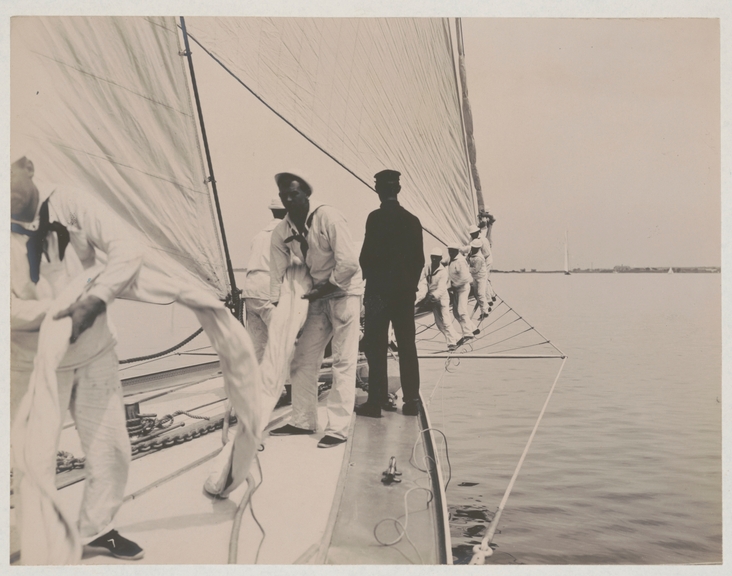
The pressure came on as the American’s started to rack up the wins, and the amateurs aboard Endeavour made mistakes. The US closed out the series 4-2, and at the age of 101, at the end of an extraordinary life, Sopwith’s biographer recorded that his only regret was sacking that professional crew.
A second challenge from Sir Thomas was met by what many regard as one of the all-time Cup “superyachts” – Ranger. Harold Vanderbilt was taking no chances second time around. Endeavour II was no slouch, but she couldn’t touch the Defender, and the series slipped away without a single race win.
The Second World War created an even bigger hiatus for the America’s Cup than the First – it was 1958 before Cup racing resumed in the much smaller 12 Metre Class. Two British Challenges in 1958 and 1964 were lost by embarrassing race margins and 4-0 scorelines.
Those British efforts were split by the first Australian challenge, with the Aussies taking a race off the Americans. It was a sign of things to come, the Aussies went all in, challenging for the next six Cup matches and eventually winning in 1983. It was commitment and consistency that had mattered.
Meanwhile British efforts stalled; the nation didn’t compete again until 1980. The impetus was carried into 1983, when Victory reached the Challenger Series final. Peter de Savary’s yacht only lost to the eventual winner of the America’s Cup, Australia II. The momentum couldn’t be maintained into the 1987 Challenge though, which didn’t reach the semi-finals of the Challenger Series. It then collapsed, almost complete paralysis set in with just a single effort – in 2003 – over the next three decades.
The rest has not yet had time to become history; the last nine years have seen four successive British Challenges, all led by the same man; Sir Ben Ainslie. Only Sir Thomas Lipton can claim that continuity, that commitment. And unlike Sir Thomas, these modern teams have created momentum; Challenger Series semi-finalists in 2017, Challenger Series finalist in 2021, Challenger Series winner and beaten America’s Cup Challenger in 2024. There is only one more step on the ladder. Now that will be history.